

Online casino lobbies can feel overwhelming when thousands of titles are grouped by provider, theme and format. A more useful approach is to begin with the kind of experience you want: quick results, strategic decisions, live interaction or feature-rich slot play. Readers comparing betya casino no deposit bonus codes should also separate promotional information from the actual game catalogue, since a bonus does not determine whether a title suits their preferences. The following guide explains how to browse a large lobby carefully and choose games using practical, observable details.
Start with the type of play you actually enjoy
The broadest choice is between slots, table games, live dealer titles and instant games. Slots are generally the easiest place to begin because each title presents its own theme, reel layout and feature set. Classic slots may use simple paylines and familiar symbols, while video slots can add cascading reels, expanding symbols, bonus rounds or Hold & Win mechanics. Progressive jackpot games offer a different appeal, but their prize structure should never be treated as a promise of a large return.
Table games are better suited to players who prefer decisions over constantly changing visual features. Blackjack, roulette, baccarat and craps each create a different rhythm. Blackjack involves repeated choices during a hand, roulette relies on selecting bet types around a wheel, and baccarat usually offers a simpler betting interface. Video poker occupies a middle ground, combining card-game decisions with a machine-based format. The right starting point depends more on desired involvement than on a title’s popularity.
Instant and original-style games can be useful for shorter sessions. Crash, Mines, Diamonds and similar formats often resolve quickly, while game-show titles and live tables provide more presentation and interaction. A short round can still encourage rapid repeated play, so speed should be considered alongside personal limits. Browsing by format first prevents the common mistake of selecting a game only because its artwork, jackpot label or promotional placement is attractive.
Use lobby filters to narrow a large catalogue
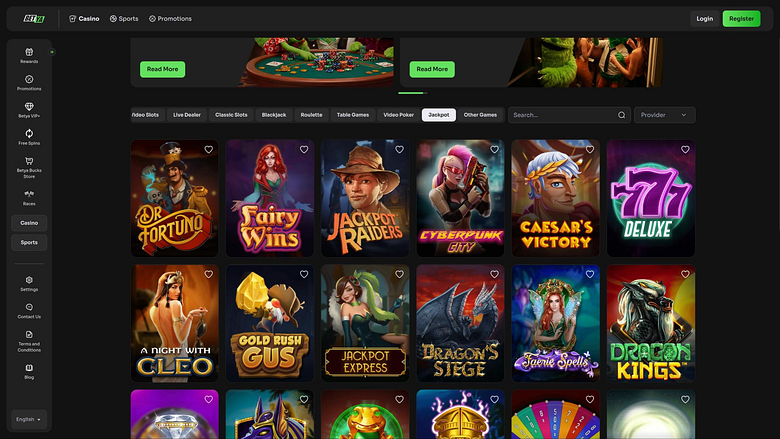
A large game library becomes easier to navigate when filters are treated as research tools rather than decoration. Useful categories include New, Top 50, Hot, Favorites and Recents, followed by specific groups such as Video Slots, Classic Slots, Live Dealer, Blackjack, Roulette, Jackpot and Video Poker. “New” may help discover recent releases, while “Favorites” and “Recents” are more practical for returning to titles already considered.
Provider names can also guide discovery, especially when a player recognizes a studio’s usual style. The catalogue is reported to include developers such as Pragmatic Play, Evolution, Play’n GO, Yggdrasil, Betsoft, BGaming, Quickspin and Relax Gaming, among others. That does not mean every title from one studio has identical mathematics or design. Use a provider filter to find familiar presentation, then inspect each game individually for its own rules, paytable and stated information.
Search results should be checked rather than accepted at face value. A title may appear in several promotional or popularity categories, but that placement does not establish quality, value or suitability. Before opening a game, look for the paytable, available bet range, bonus features and any displayed RTP information. A filter can reduce the number of choices; it cannot decide whether a particular title’s pace, complexity or cost fits the session you intended to have.
Read game information before committing funds
Many RNG titles provide a demo mode, which can be useful for learning controls and understanding how a feature works. It can show where paylines, bonus symbols and special buttons are located without requiring a real-money round. However, a short demonstration cannot verify long-term RTP, volatility or the likelihood of triggering a bonus. Treat it as a navigation and familiarity tool, not as evidence that a game is likely to produce a particular result.
RTP is a long-run statistical figure, not a forecast for one visit. Volatility is another useful concept: higher-volatility games may produce less frequent results with larger swings, while lower-volatility designs may produce more frequent but potentially smaller outcomes. These labels should be read alongside the actual paytable and rules. If the information is not displayed clearly, check the operator’s stated game details before deciding whether to play.
Special features deserve close attention because they can alter both pace and spending. Hold & Win mechanics, cascading reels, bonus buys and expanding symbols may make a title more engaging, but they can also lead to quicker rounds or larger optional stakes. Bonus-buy availability should not be confused with a better chance of profit. The safest comparison is practical: understand what activates the feature, what it costs and whether the game remains enjoyable without it.
Compare live tables with RNG alternatives
Live dealer games appeal to players who want streamed tables, a visible dealer and a more social atmosphere. Live blackjack, roulette and baccarat can feel closer to a physical casino because the action unfolds in real time. Dealer chat and table presentation may add interest, but they also create a slower, scheduled rhythm. A live table is not automatically more transparent or more favourable than its RNG counterpart; the rules and bet conditions still require review.
RNG versions are usually more convenient for players who want immediate rounds and compact interfaces. An electronic roulette, blackjack or baccarat title may offer several stake options and a faster pace than a live stream. That convenience can be useful on a small screen, but it may also make repeated betting easier to overlook. Players who prefer deliberate decisions should consider whether the format encourages pauses or removes them.
When comparing the two formats, focus on the experience rather than assumptions about outcomes. Ask whether you want conversation, visual realism and a shared table, or speed, privacy and simpler navigation. For responsible information about gambling-related choices in a Canadian context, the Responsible Gambling Council’s public resources offer general educational material. They do not confirm the rules or performance of any particular game, so title-specific details must still be checked separately.
Build a short, balanced game shortlist
Once the lobby has been narrowed, choose a small shortlist instead of opening every appealing title. Three or four games are usually enough to compare different experiences: perhaps one classic slot, one feature-led video slot, one table game and one instant title. Record the basic details that matter to you, such as pace, displayed RTP, volatility information, minimum stake and whether the interface is easy to understand.
Next, decide what would make you leave a game. Confusing rules, unexpectedly rapid rounds, distracting bonus prompts or an uncomfortable bet range are valid reasons to stop browsing that title. A game does not need to be “bad” to be unsuitable. Similarly, a recent or highly featured game does not need to become part of your regular rotation. Personal fit is a more useful measure than a lobby label.
Finally, keep promotional conditions separate from game selection. A no-deposit or free-spin offer may restrict eligible titles, impose a fixed stake, set an expiry period or apply wagering requirements to winnings. Those conditions can change the practical value of a promotion, and a qualifying game may still not match your preferred style. Read the current offer terms and the game rules independently, then use account limits or a cooling-off setting if browsing begins to feel rushed.
Frequently asked questions about game discovery
Can a demo round show whether a slot is profitable?
No. A demo can explain the controls, paylines and bonus features, but a short session cannot establish a game’s long-term return or volatility. Use demo play to decide whether the format is understandable and enjoyable, then review the title’s displayed information before considering real-money play.
Are live dealer games better than RNG table games?
Neither format is automatically better. Live tables offer streamed dealers and a social presentation, while RNG games usually provide faster, simpler rounds. Compare the published rules, bet range and pace that suit you. The choice should be based on experience and control, not an assumption that one format guarantees better results.
What should I check before trying a new title?
Check the paytable, displayed RTP, volatility information, minimum and maximum stakes, feature costs and any bonus-buy options. Confirm whether the game is eligible for a promotion separately. If the rules or conditions are unclear, do not rely on a lobby label; look for fuller operator information before proceeding.