Linen Hire | Table cloth Hire | Coloured Linen Hire | Chair Cover Hire

Guia: encontre odds de valor na Liga Conferência com o comparador

Encontrar valor real na Liga Conferência da UEFA exige mais do que intuição: exige comparar odds entre casas de apostas, medir a discrepância e agir antes que o mercado se corrija. Este guia prático mostra como usar um comparador de odds para caçar discrepâncias de 5% ou mais em mercados 1X2, com foco em equipas subvalorizadas pelos media, como o Panathinaikos e o Getafe. É um processo sistemático, não uma aposta cega em prognósticos de futebol.

Onde nascem as discrepâncias de 5% nos mercados 1X2 da Liga Conferência

A Liga Conferência da UEFA concentra um volume de apostas inferior ao da Liga Europa da UEFA e da Liga dos Campeões. Esse detalhe importa: menos liquidez significa que as casas de apostas ajustam linhas com menos frequência e que os algoritmos de precificação reagem mais devagar a notícias de última hora, como lesões ou rotações. O resultado são odds 1X2 que divergem entre operadores no mesmo jogo. Quando comparas cinco ou seis casas lado a lado, uma discrepância de 5% na odd da vitória visitante deixa de ser raridade e passa a ser padrão em jogos de equipas com menos cobertura mediática.

O Panathinaikos é o exemplo que uso sempre. Joga num campeonato com boa base de dados estatísticos, mas tem menos atenção internacional do que o AC Milan ou o Bayer Leverkusen. Nesses casos, uma casa pode abrir a vitória grega a 2.10 enquanto outra mantém 2.25 durante horas. Essa diferença de 7% não é ruído: é margem recuperável. O mesmo se aplica ao Getafe, equipa espanhola com perfil defensivo que os modelos genéricos penalizam em demasia. O comparador de odds serve exatamente para isso: expor o desalinhamento entre o preço justo e o preço oferecido.

Convém distinguir valor de palpite. Um palpite de futebol pode ser correto do ponto de vista tático e ainda assim não ter valor. O valor existe quando a probabilidade implícita da odd é inferior à probabilidade real do evento. Se estimas 48% para a vitória do Panathinaikos, uma odd de 2.25 implica 44,4% e representa valor. Uma odd de 2.00 implica 50% e não representa nada. O comparador é o instrumento que te permite fazer esta conta em segundos, em vez de percorrer seis sites manualmente.

Como calibrar a linha de referência antes de apostar

Antes de procurar discrepâncias, precisas de uma linha de referência. Reúne as odds 1X2 de pelo menos cinco casas de apostas para o mesmo jogo e retira a margem da casa mais eficiente. Essa odd sem margem funciona como âncora. Qualquer cotação 5% acima dessa âncora, noutra casa, é candidata a valor. Sem âncora, comparar odds é apenas colecionar números.

Depois, cruza a âncora com estatísticas de futebol verificáveis: golos esperados por 90 minutos, forma recente em casa e fora, e histórico de confrontos diretos. No caso do Lyon contra o Crystal Palace na Liga Europa da UEFA, por exemplo, o modelo precisa de pesar a diferença de estilo entre o futebol francês e o inglês. O mesmo raciocínio aplica-se ao Benfica contra o Celtic: a vantagem caseira do Benfica é consistente, mas o Celtic tem um registo europeu fora que os modelos por vezes subestimam. Estas nuances são o que separa uma análise de confrontos séria de um palpite aleatório.

O erro mais comum que vejo em apostadores que começam a usar comparadores é confundir a odd mais alta com a odd de valor. A odd mais alta num jogo é frequentemente oferecida por uma casa com margem agressiva noutros mercados, ou com limites de aposta baixos. Verifica sempre o bónus de registo, os requisitos de rollover e os limites máximos antes de mover dinheiro. Um bónus de apostas atrativo não compensa uma odd 3% abaixo do mercado.

Checklist operacional para validar valor antes de confirmar a aposta

Esta é a sequência que uso em cada ronda europeia. melhores casas de apostas em portugal offers additional context worth reviewing. Não é teoria: é um procedimento que reduz erros de execução e evita apostas emocionais.

Primeiro, abre o centro de jogos e filtra os encontros da Liga Conferência da UEFA e da Liga Europa da UEFA. Cada competição inclui 18 jogos no centro de jogos, o que dá 36 oportunidades por ronda para comparar. Não precisas de analisar todas: escolhe os cinco ou seis jogos onde conheces melhor as equipas. O SC Braga, o FC Copenhagen, o Ajax e o Monaco são bons pontos de partida porque têm histórico europeu consistente e dados acessíveis.

Segundo, corre o comparador de odds em cada jogo selecionado e regista a discrepância percentual entre a melhor e a pior cotação no mercado 1X2. Marca apenas os jogos com discrepância igual ou superior a 5%. Abaixo disso, a vantagem desaparece depois das comissões e do risco de movimentação de linha.

Terceiro, confirma os resultados ao vivo e as odds 1X2 em tempo real antes de submeter. Uma linha pode mover-se em minutos, sobretudo perto do apito inicial, quando as equipas anunciam os onze. Se a discrepância colapsar para 2% ou 3%, cancela. O valor que existia já não existe.

Quarto, define o tamanho da aposta pela probabilidade estimada, não pela confiança subjetiva. Se estimas 48% e a odd é 2.25, a fração de Kelly sugere cerca de 4% da banca. Aplica metade disso se fores conservador. Este passo é o que transforma apostas em futebol num processo com esperança matemática positiva, em vez de uma sequência de palpites avulsos.

Quinto, regista tudo. Data, jogo, competição, odd obtida, odd de referência, discrepância e resultado. Ao fim de 50 apostas tens dados suficientes para saber se o teu processo gera valor ou se estás apenas a pagar margem a casas de apostas. Um tipster que não mantém registo está a adivinhar com confiança extra.

Por fim, presta atenção à cobertura mediática como sinal contrário. Jogos com muita atenção, como um AC Milan contra um Bayer Leverkusen, tendem a ter linhas eficientes e discrepâncias mínimas. Jogos com menos atenção, como Panathinaikos ou Getafe em fases iniciais, tendem a ter linhas mais lentas e discrepâncias maiores. O comparador de odds é mais rentável onde há menos olhos.

Se seguires esta checklist em cada ronda, o comparador deixa de ser uma ferramenta de consulta e passa a ser o centro do teu processo. Foca-te nas discrepâncias de 5% ou mais, valida sempre com estatísticas de futebol e não persigas odds que já se moveram. O valor na Liga Conferência existe, mas está concentrado em equipas que o mercado observa com menos atenção.

Session courte : pourquoi monter la mise réduit vos spins

Une session courte de slots se joue sur un budget de spins, pas sur un budget en euros. Beaucoup de joueurs raisonnent dans l’autre sens : ils fixent une somme, perdent quelques spins, puis doublent la mise pour revenir a l’equilibre. Le calcul est simple et implacable. Si vous passez de 0,20 EUR a 1 EUR apres six spins perdants, vous ne jouez plus la meme session : vous avez divise par cinq le nombre de spins restants. Sur une session de 30 a 50 spins prevue au depart, cette manoeuvre la termine en quelques minutes et transforme un divertissement calme en course au bankroll.

Le mauvais reflexe qui vide une session courte

Le scenario revient sans arret. Vous ouvrez Millioner Casino avec 40 EUR, vous choisissez une machine a 0,20 EUR le spin, et vous vous donnez 200 spins pour une demi-heure de jeu. Apres une serie de dix spins sans gain, l’idee surgit : monter a 1 EUR pour “rattraper”. Sauf qu’a 1 EUR, vos 38 EUR restants ne representent plus 190 spins mais 38. La session est deja finie, vous ne l’avez simplement pas encore remarque.

Ce n’est pas une question de malchance. C’est de l’arithmetique. Le nombre de spins restants est egal au bankroll divise par la mise. Toute augmentation de mise apres des pertes agit comme un accelerateur a sens unique : elle raccourcit la duree de vie de votre session au moment precis ou vous avez le moins de marge. Sur une session longue, l’effet est dilue. Sur une session courte, il est total.

Les joueurs qui repetent cette erreur confondent deux choses : recuperer une perte et prolonger un divertissement. Rattraper une perte suppose que la machine vous “doit” quelque chose, ce qui est faux sur un generateur de nombres aleatoires. Prolonger le divertissement suppose de garder la mise basse, ce qui est exactement l’inverse de ce que fait le joueur qui monte sa mise. Le seul resultat garanti de la mise augmentee, c’est moins de temps de jeu pour le meme budget.

Ce que coute vraiment une mise qui grimpe en cours de route

Le calcul des spins restants avant de toucher au curseur

Prenez l’habitude de faire ce calcul avant chaque changement de mise : bankroll restant divise par nouvelle mise. Avec 25 EUR restants, une mise a 0,20 EUR donne 125 spins. La meme somme a 0,50 EUR donne 50 spins, et a 2 EUR elle donne 12 spins. Douze spins, c’est moins d’une minute de jeu sur la plupart des slots. Vous avez paye le meme prix pour un dixieme du temps de session.

La volatilite aggrave le phenomene. Sur un titre comme Gates of Olympus 1000 de Pragmatic Play, les series sans gain peuvent depasser trente spins. Si vous montez la mise au milieu de ces series, vous absorbez les creux a un cout multiplie, et vous n’avez souvent plus de budget quand le gain arrive enfin. C’est la difference entre patienter et payer pour patienter plus cher.

Un exemple chiffre rend la chose concrete. Session de 50 EUR, mise initiale 0,20 EUR, soit 250 spins theoriques. Apres 20 spins perdants, le bankroll est a 46 EUR. En restant a 0,20 EUR, il reste 230 spins. En passant a 1 EUR, il reste 46 spins. En passant a 2,50 EUR, il reste 18 spins. Le joueur qui “rattrape” a 2,50 EUR a reduit sa session de 92 pour cent en une seule decision.

Pourquoi le “rattrapage” n’a aucun fondement sur un RNG

Un slot certifie ne memorise pas vos pertes. Chaque spin est independant, et la probabilite de gain sur le spin suivant ne change pas parce que les dix precedents ont echoue. Le fameux “il va payer” est une illusion de joueur, pas une propriete du jeu. Les editeurs comme Play’n GO, Greentube, Amusnet, BGaming, Yggdrasil, Habanero, Betsoft, Spinomenal ou Booming Games publient tous des RTP verifiables, et aucun ne compense les pertes passees d’un joueur.

Il y a un corollaire que peu de joueurs integrent : augmenter la mise apres une perte augmente aussi le cout de chaque creux futur. Sur Book of Dead ou Sweet Bonanza, les series negatives font partie du fonctionnement normal du jeu. Les joueurs qui les traversent a mise constante les ressentent comme un passage. Ceux qui les traversent a mise croissante les ressentent comme une hemorragie.

Le bonus de bienvenue ne change pas cette mecanique. Un pack de bienvenue comme celui de Millioner Casino, avec 200 % jusqu’a 2 500 EUR et 300 tours gratuits via le code WELCOME2026, donne plus de matiere a jouer, pas plus de raison de monter la mise. Les conditions de mise s’appliquent souvent sur le montant du bonus, et une mise elevee epuise plus vite le solde disponible pour remplir ces conditions. Sur une session courte, le bonus se travaille a petite mise, lentement.

Construire une session courte qui tient ses promesses

La regle de la mise fixe et du plafond de spins

La methode la plus solide tient en une phrase : une mise, un nombre de spins, pas de modification en cours de session. Vous fixez la mise avant le premier spin en fonction du nombre de spins que vous voulez, pas en fonction de ce que vous espere gagner. Pour 30 minutes de jeu a 0,20 EUR, il faut environ 300 spins, soit 60 EUR. Pour 15 minutes, 150 spins, soit 30 EUR. Le budget decoule de la duree desiree, jamais l’inverse.

Cette regle a un avantage secondaire : elle rend les pertes lisibles. Si vous perdez 10 EUR sur une session a 0,20 EUR, vous savez que vous avez joue environ 50 spins. Si vous perdez 10 EUR apres avoir monte a 1 EUR, vous savez que vous avez joue une dizaine de spins et que vous avez paye le prix d’une session complete pour un dixieme du temps. La comparaison est brutale, et c’est precisement son interet.

Le choix de la mise basse n’est pas une punition. C’est ce qui permet de decouvrir un catalogue comme les plus de 12 000 jeux de Millioner Casino sans bruler son budget en une soiree. Les sessions courtes servent a explorer, a tester un editeur, a passer un moment. Elles ne servent pas a se refaire.

Les tournois de slots sont un cas particulier. Millioner Casino organise des tournois jusqu’a 5 000 000 euros, et certains classements recompensent le volume de mises. Dans ce cadre, monter la mise peut se defendre, mais cela releve d’une strategie de competition, pas d’une session de detente. Ne melangez pas les deux registres : un tournoi se joue avec un budget dedie et une mise assumee comme un cout de participation, pas comme une tentative de rattrapage.

Les details qui font la difference sur une session breve

Le mode de paiement influence la duree reelle de votre session. Millioner Casino accepte Visa, Mastercard, Skrill et Bitcoin, et opere en euros, ce qui evite les conversions mentales approximatives. Un depot par carte peut prendre quelques minutes a apparaitre selon la banque, alors qu’un depot Skrill ou crypto est souvent immediat. Sur une session courte, attendre un depot qui n’arrive pas est une source de frustration qui pousse a jouer plus gros des que l’argent est la. Preparez le depot avant de commencer, pas pendant.

Le retrait crypto merite une mention. Il est rapide, mais il faut verifier le reseau et l’adresse avant de valider. Une erreur d’adresse sur un retrait Bitcoin ne se corrige pas. Sur une session courte, l’objectif est de sortir avec ce qui reste, pas de decouvrir les subtilites du retrait au moment ou vous voulez arreter.

Le support client 24/7 en francais et le chat en direct de Millioner Casino sont utiles si un probleme technique survient en cours de session, par exemple un spin bloque ou un solde qui ne se met pas a jour. Gardez la fenetre de chat accessible sans la solliciter : sur une session de 20 minutes, une discussion avec le support consomme le temps de jeu autant que le budget.

Le programme de fidelite VIP crown joue dans le meme sens. Il recompense la regularite, pas les coups de tête. Un joueur qui fait trois sessions courtes par semaine a mise constante progresse plus vite dans le programme qu’un joueur qui vide son compte en une soiree a mise elevee. La coherence paie plus que l’intensite.

Reste la question de la licence. Millioner Casino detient une licence Anjouan, ce qui implique un cadre de jeu reel mais moins protecteur que certaines juridictions europeennes. Pour un joueur français, cela signifie que la verification d’identite et les limites de retrait doivent etre lues avant de deposer, pas apres. Une session courte mal preparee se termine souvent par un retrait bloque faute de documents, et la tentation de rejouer le solde en attendant la verification est reelle. Envoyez vos documents des l’inscription.

La mise basse n’est pas une contrainte de petit joueur. C’est le levier qui vous donne le plus de spins pour un budget donne, donc le plus de chances de voir un gain tomber pendant que vous etes encore la. Sur une session courte, chaque euro mal place en mise se paie en temps de jeu perdu. Fixez la mise, tenez-la, et laissez le nombre de spins faire son travail. Si vous voulez tester Millioner Casino dans ces conditions, faites-le avec un budget qui correspond a la duree que vous voulez jouer, pas a la somme que vous espere gagner.

Why Coach Leather Bag Is Popular Care and Cleaning Tips

Maintaining Coach Leather, Canvas and Suede

Since our research found no official care guidance published by Coach, all the advice here is general material practice instead of brand instructions. That is important as finishes differ season by season, which means the label or product description for your own item should always take priority. Within its range, Coach uses several very different materials: glovetanned, pebbled and patent leather, Signature canvas and jacquard, suede and shearling. Each stands up in its own way to water, heat, oil and friction, so the guide covers them one by one. Whether a coach bag came from a flagship or a coach outlet, it is the material, not the channel, that decides how to look after it. A short weekly routine covers most of the basics, and before using any cleaner, conditioner or spray, test it on a hidden area and wait a day to see how the surface reacts.

  1. Clear out the bag and remove crumbs, receipts and loose debris.
  2. Use a soft, dry cloth to wipe the exterior.
  3. Handle any marks using the method for that material.
  4. Let any damp areas air-dry away from heat and sunlight.
  5. Stuff the bag lightly and return it to a breathable dust bag.

Glovetanned Leather: Everyday Care

Glovetanned leather is the finish Coach modelled on the way a worn baseball glove softens, and Coach positions it as leather designed to improve with use. That makes gentle, regular handling more valuable than heavy treatment. Blot spills straight away without rubbing them into the surface, and remove dust and light marks with a soft, dry cloth. If the leather starts to look dry, a small amount of conditioner made for smooth leather, applied thinly and buffed off, is the standard approach. Too much conditioner can darken the colour or leave a tacky feel, so apply it sparingly and only now and then, and let rain spots dry naturally at room temperature, as radiators and hairdryers can stiffen or crack leather. Over time the surface takes on a patina, and on coach purse vintage pieces that softer, mellowed look is part of the appeal rather than damage. By contrast, a supposedly vintage glovetanned bag that feels plasticky or is peeling deserves a closer look before you buy it.

Pebbled, Smooth and Patent Leather: Everyday Care

Pebbled leather, found in families such as the Willow, has a textured grain that masks small scuffs better than a smooth finish does. A dry microfibre cloth and an occasional light conditioning are usually all it requires. Smooth leathers show scratches more easily, so keep keys and sharp objects in an inner pocket or a pouch. Patent leather, used for some versions of the Soho Bag 25, has a glossy surface that can take on dye from printed paper and dark fabrics. Store patent pieces separately from other items, and remove fingerprints using a soft, slightly damp cloth. Skip home products entirely with exotic skins, such as the alligator offered on a Rogue 25, since they require specialist attention and a professional’s help. For every kind of leather, never let it soak, and steer clear of alcohol, household sprays and baby wipes, because they can strip or dull the finish.

Caring for Signature Canvas and Jacquard

Among coach handbags, canvas versions of bags such as the Juliet Shoulder Bag 25 and jacquard versions of the Soho Bag 25 display the Signature “C” pattern that dates to 2001. Check the product description to see which base material you have, because the two react differently: a coated surface can usually be wiped with a cloth dampened with water and a drop of mild soap, then dried with a clean towel. Since woven jacquard is closer to a textile, dab stains gently and avoid scrubbing, since scrubbing can fuzz the weave. If your bag combines the pattern with leather trim, keep water off the handles and edges and treat those parts as leather. Never put a canvas bag in a washing machine or tumble dryer, where its structure and hardware can warp. Since light-coloured pieces can pick up dye from dark denim, a quick wipe after wearing new jeans can prevent build-up. Store canvas bags stuffed and upright as well, because deep creases in a coated surface can become permanent.

Suede and Shearling: Care Tips

Suede is found in coach clothing and footwear alike, such as the laceless Skate Sneaker and the suede coats shown in the Fall 2026 collection. Next to smooth leather, its open, napped surface marks more easily, particularly with water, oil and grease. Going over suede regularly with a soft suede brush, done in one direction, lifts dust and raises the nap. Dry marks can often be lifted with a suede eraser, while oily stains are best left to a specialist cleaner, and if suede becomes wet, blot it, stuff shoes or sleeves with paper, and let it dry slowly away from direct heat before brushing. Shearling coats deserve professional cleaning for anything beyond light surface dust, plus broad hangers and a breathable cover. A protective spray made for suede can help, but test it first, because some sprays deepen certain colours.

  • A soft suede brush
  • A suede eraser to remove dry marks
  • Plain paper to pad out shoes and sleeves
  • A suede protector spray, patch-tested on a hidden area

Caring for Hardware and Linings, Plus Storage

Turnlocks and kisslock frames need the same attention as the leather around them. Always keep metal polish away from nearby leather, which it can stain, and wipe hardware with a dry cloth after use. Linings pick up crumbs, pen ink and makeup, so empty the bag regularly and carry liquids in a sealed pouch. To store bags, lightly stuff them with acid-free tissue to help them hold their shape, then keep them upright in a breathable dust bag and not plastic, since plastic traps moisture. Since handles and strap anchors can stretch, avoid hanging heavy bags by their straps for long periods. Put away sneakers and leather goods in a cool, dry spot, out of direct sunlight, since it can fade colour. If you are reading a coach review before buying, note the materials it mentions, because they decide how much of this routine a piece will need.

Material Day-to-day care What to avoid Seek a specialist for
Glovetanned leather pieces Dry cloth, occasional light conditioner Direct heat, soaking, heavy conditioning Deep stains or cracks
Pebbled and smooth leather Microfibre cloth Household sprays and alcohol Colour loss or tears
Patent leather pieces Slightly damp soft cloth Contact with print or dark fabric Deep-set dye transfer
Coated canvas pieces Damp cloth and a little mild soap Washing machines or dryers Cracked or peeling coating
Jacquard fabric Light, gentle blotting Hard scrubbing Set-in stains
Suede and shearling pieces A soft brush and a suede eraser Water, oil or direct heat Oily or large stains
Exotic skins Gentle dusting only Any home cleaning product All cleaning and repairs

When to Seek Professional Help

Some damage is better dealt with by a specialist leather cleaner or repairer than by home products. Jobs such as peeling edge paint, torn linings, loose stitching and broken hardware usually need proper tools and materials. Illustrating how much an older bag can be revived, Coach’s own (Re)Loved programme cleans and repairs pre-owned bags for resale as Restored pieces; its trade-in scheme runs in North America retail stores and selected UK and Japan stores and reportedly does not accept outlet and canvas items. Shoppers searching coach uk can start with the Coach House on Regent Street in London, and anyone unsure what help is available locally can ask at a coach store. Your receipts and dated photos of the item are useful for any service conversation or a later sale, so hold on to them. Above all, catch small problems early: a loose thread or a scuff is far easier to fix than a split seam.

Understated Leather Totes The Row Ascot Bag

A Guide to The Row Discount Period for Buyers Before They Buy

Cutting prices is an action The Row rarely undertakes, but whenever it happens, the price cut takes place without fanfare. You won’t find no flashing banner, no countdown timer, no email blast proclaiming “50% off.” The house’s handling of price reductions reflects its approach to creative direction: restrained, intentional, and easy to miss if you are not tuned in. Anyone tracking a row sale in 2026 should first realize that timing and patience carry more weight than luck.

Mary-Kate and Ashley Olsen launched The Row, and the brand built its name around understated construction, restrained tones, and leather pieces engineered rather than just assembled. This is exactly why, once markdown windows open, they pass at speed. Quantities are deliberately restricted — The Row produces in smaller runs than most luxury houses — so a marked-down style can vanish from stock within days, sometimes just hours, above all in popular sizing and understated colorways such as black, ecru, and tan.

The Real Timing Behind The Row Price Drops

The Row usually restricts discounting to two periods — a mid-season adjustment around June-July, and a broader end-of-season sale in December-January — different from mass-market high-end names that hold seasonal discount events four or five times a year. Even though they fluctuate slightly year to year according to inventory levels, such dates aren’t guaranteed; customers who have followed the label across several seasons still report this cadence staying fairly steadily into 2026.

Retailers carrying The Row, including multi-brand rowsale.org/top-handle luxury sites, sometimes run their own promotional cycles independent of the brand’s direct site. This means a row sale on a third-party retailer might appear before or after The Row’s own markdown period. Checking multiple authorized stockists rather than relying on a single source increases the odds of catching a discount on the exact piece you want.

Shoppers who avoid sales also note that certain items rarely see a price cut. The most sought-after signature bags — most notably anything from the Margaux family — usually hold their full price even when official promotions are running, because demand consistently outstrips the limited supply. Compared to its most emblematic bags, jackets and outerwear pieces go on sale with greater regularity.

Row Bags Overview: What’s Actually Worth Buying

Any row bags overview has to start with construction. The Row’s leather goods use vegetable-tanned and semi-aniline leathers sourced primarily from Italian tanneries, finished with hand-applied edge paint rather than machine-stitched binding. That detail alone explains part of the price point — hand-finishing takes longer and costs more than automated production, and it shows in how the edges age over years of use rather than fraying within months.

Three names turn up repeatedly in the secondhand market and style edits among top row bags: the Margaux, the Sofia, and the Everyday Tote. Each bag fulfills a separate function, and understanding those distinctions matters more than chasing whatever style happens to be trending on social media that week.

  • This style is available in several sizes (commonly referenced as Margaux 12, 15, and 17) and is structured enough to maintain its silhouette on a shelf, making it a go-to option for shoppers seeking a bag that reads as put-together even half-empty.
  • Including the Sideby and N/S Park styles, The Row’s tote bag offerings lean softer and slouchier, built for daily carry instead of showcasing, leaning toward less internal structure and softer silhouettes.
  • Smaller crossbody and clutch styles from the brand rotate more frequently and are frequently the pieces that actually show up in sale periods, since they entail reduced manufacturing costs and faster sell-through.

Resale value figures prominently in why shoppers treat The Row differently other luxury handbag brands. Since output stays limited and demand remains steady, well-kept pieces — especially the Margaux — often keep 60-75% of retail value on the secondary market, according to consignment platforms that monitor luxury handbag pricing. Instead of resembling most contemporary luxury labels, that retention rate is closer to what you’d expect from Hermès or Chanel.

Shopping for The Row Margaux Bag Without Overpaying: Where to Look

The question of where to buy The Row Margaux bag comes up constantly, and the honest answer is: it depends on your priorities. Offering the most trustworthy authentication and the best chance at pre-order access for new colorways, The Row’s own site and flagship boutiques almost never discount the Margaux specifically.

Authorized multi-brand retailers — those that carry a curated selection of The Row’s collection alongside other contemporary and luxury labels — sometimes receive restricted Margaux stock ahead of a wider rollout. These retailers sometimes include the Margaux in their own promotional events even when The Row’s direct channels are holding firm on price — this is where persistent shoppers sometimes find real discounts of 10-20%.

Consignment and resale platforms dedicated to authenticated luxury goods represent the third route, and they’re worth considering carefully. A well-cared-for Margaux in a classic colorway can appear on resale marketplaces for 20-30% below original retail, particularly if it’s a size or color that fell out of favor. The tradeoff is longer wait times to find the right piece and the need to verify authentication credentials before purchasing.

Buyers should be wary of unusually steep discounts from unfamiliar sellers. A Margaux listed at 50% off retail from a site with no verifiable authentication process is a red flag, not a bargain. The Row’s limited production numbers make counterfeits a real risk in this price bracket, and the brand does not offer a public authentication service, which puts more responsibility on the buyer to vet the seller.

Sizing Up The Row’s Flagship Handbag Silhouettes

Since the bulk of the discussion about the row bag range tends to focus on choosing between variants, a straightforward comparison brings into focus what each style is really meant to do.

Style of Bag Works Best For Build Sale Frequency
Margaux A piece worth investing in, a structured daily bag Solid, keeps its form on its own Hardly ever discounted, including in sale windows
The Sideby Tote A work bag, for laptop and document carry Soft-sided, it slouches under a light load Periodic, mid-season
Sofia Nighttime or smaller daytime carry Semi-structured Sporadic
N/S Park Tote Travel and bulky day-to-day items Soft-sided and it grows with added weight Middling, appears more often in markdowns

People who search “row sale” will typically find every bag shape lumped together, and that’s why making this comparison is worth the effort: in reality, discount likelihood varies enormously by silhouette.
Larger carryalls and totes are reduced in price more often simply because they get manufactured in somewhat greater quantities than the Margaux style.

A Method to Navigate the 2026 Promotions Timeline Smartly

For shoppers serious about catching The Row at a reduced price this year, a few practical habits make a measurable difference. Signing up for notifications at multiple authorized retailers rather than just the brand’s own site widens the net considerably, since stock allocation differs between channels.

Instead of browsing widely, monitoring specific SKUs makes a difference too. Because stock levels shift on an hourly basis at high-traffic times across that broader listing, revisiting that specific page at regular short intervals during known sale windows beats paging through it — at least if a given Margaux size-color pairing is what you’re after.

Choices are genuinely widened when you’re open on size and color. Even at full price, neutral tones like black and tan vanish quickest; meanwhile rarer or off-cycle hues tend to appear in a markdown, given that they sell slower at first. Customers open to a less predictable shade often come across better availability and better discounts.

One more thing, structural condition are just as important no less when purchasing pre-owned pieces as when buying new. Examining corner wear, the state of the edge paint, and any hardware tarnish before you buy guards against spending close to full price on a bag that requires repair. Leather from The Row ages gracefully, but that’s only true if it started out in solid shape.

The overarching takeaway for whoever is navigating the row market this season is simple: the brand’s discipline around discounting is purposeful, and treating a row sale as a rare event rather than a routine annual ritual will result in smarter, faster decisions when the window does open.

Original Amiri Sweatpants Amiri MX1 Jeans

AMIRI Clothing: Each Product Area of the Line, Named Properly

The distressed jean is the single reply you get when most people is asked what amiri clothing consists of. Denim remains both the centre of gravity and the birthplace of the house, but the label now sells much else beyond it. Names here come from official pages and authorised stockists rather than blog copy, and the assortment is walked category by category. That sourcing matters, since no small amount of writing about this label repeats model names that do not exist. Prices throughout are observed market figures from 2026 listings, not an official price list, and they move. Run from Los Angeles and shown in Paris, the house founded by Mike Amiri stayed menswear-first until womenswear arrived in 2021.

Denim, and the Names That Are Real

Repair is the governing verb here, since garments are hand-distressed first and then conspicuously rebuilt with contrast material. The signature jean is the MX1, a skinny five-pocket cut in Italian stretch denim repaired with pleated leather, and ovine leather is specified as the contrast in its official composition. Core Collection membership, manufacture in the USA and an observed $1,090 round out the picture. The Stack is the entry point to core denim at an observed $750, also made in the USA, and its long inseam is engineered to concertina at the ankle rather than being a length error. Where Thrasher gives the hand-distressing on its own, without the structured leather panel that defines the MX1, Shotgun brings blown-out frayed holes with sanded edges. MX2 is a genuine model name whose panelling sources describe inconsistently, and its collection pages showed no live products when checked in 2026.

  • MX1, MX2, Thrasher, Stack, Shotgun
  • Carpenter, Faded Carpenter, Carpenter Repaired Baggy
  • MA Fit, amiri shirts Washed Baggy, Baggy Cargo, Repaired Boot Cut
  • Monogram Straight Leg, Track Jean, Patchwork, Leather Hybrid

Treatments Are Not Fits

The most repeated error in writing about this label is upgrading a treatment to a fit. Bandana is a motif used across the line, and it pops up as the MX1 Bandana Jacquard, the MX1 International, the Bandana Repair Straight Jean, a Bandana Short and a Bandana Buckle Boot. On those pieces the paisley panel takes the structural position leather takes on an MX1, so it is a substitution rather than decoration. Crystal runs the same way and yields a Crystal Thrasher, a Crystal Shotgun and a Crystal Skel-Top Low, all of them sitting at the top of their bands. Stud, Eagle, Aloha, Monogram and MA Quad work identically across models. MX3 appears only as a women’s Baggy MX3, a motocross-inspired hybrid observed at $990, rather than as a men’s tier above the MX2.

Sweatshirts and Hooded Fleece

The bones motif is the marker that holds across categories, the same skeleton that sits on amiri sneakers. It lands on the Bones Oversized Hoodie, the Bones Fleece Zip Hoodie and the Bones Stacked Hoodie, and it reached jersey hoodies for Pre-Spring 2026. Its official page describes the MA Core Logo Hoodie, the least loud piece of the group, as a normal fit with kangaroo pocket, MA icon and core logo. One hundred per cent cotton, made in the USA and observed at $650, it is the plain option. The MA Quad Zip, Varsity Patch Zip, Club Amiri Zip and MA Quad Flames hoodies sit at the more worked end. The observed band runs from about $650 to roughly $1,345, and its top discounts hardest.

Tees and Jersey

Two core tees exist and they are constantly conflated with each other. The MA Core Logo Tee is Core Collection, one hundred per cent cotton, made in Italy, with the MA icon at the chest and the core logo across the back. The MA Bar Logo Tee is a different garment from a Pre-Fall 2022 collection, a printed cotton regular fit carrying the bar logo, made in Los Angeles. Beyond those two, anyone shopping for an amiri t shirt encounters dozens of graphic variants, including Quality Goods Patch, Eagle, Dreamers Chain Stitch and Club Amiri. About $425 to about $930 is the observed band, with the top taken by long sleeves and worked graphics. No part of the range is copied more, and none reaches discount faster.

Flannel and Overshirts

Flannel is a founding pillar and not a seasonal add-on, and the house’s own history cites grungy flannel shirting among its origins. At an observed $1,290, the MA Quad Bleached Flannel is the current expression, and it prices a single amiri shirt above most of the jeans. Lower down at roughly $865, the Bones Flannel Overshirt takes the skeleton motif in place of the quad. This is outerwear-adjacent shirting, so both sit at overshirt weight rather than dress-shirt weight. Denim shirting overlaps with outerwear through the Denim Repair Work Jacket and the trucker constructions. If you want a crisp poplin business shirt, this is not the house that specialises in one.

Outerwear and Jackets

Outerwear is where the price ceiling sits. The varsity family holds it, built from wool bodies with contrast leather sleeves, chenille appliques, welt zip pockets and snap closures. A Varsity Patch Jacket was observed at about $2,310 and marked down to roughly $1,155 in season, which says a lot about how this brand trades. The Staggered Varsity Jacket uses substantial wool with pebbled leather sleeves. Denim outerwear is covered by the Denim Repair Work Jacket at roughly $1,880, the Studs Flames Studded Trucker at about $1,815 and the Lea Bones Denim Blouson at about $1,399. A panelled Sport Leather Jacket exists as well, although no named bomber is a flagship here in the way the varsity is.

Tracksuits, Shorts and Sweatpants

The soft-goods end is present yet far less codified than the denim. A Track Jacket comes in black and alabaster with an elastic waistband and zip closure, and a Sport Denim Track Jacket sits alongside it. The side-stripe language moves to denim rather than jersey on the Track Jean. Seasonal shorts are part of it, with the Bandana Short as the clearest example of a treatment taken into a new silhouette. No flagship tracksuit is documented the way the MX1 or the house sneaker is, although sweatpants are in the line. Treat any article naming the definitive tracksuit with suspicion, and buy on fabric and fit instead.

Accessories, Women’s and Kids’

Accessories are a genuine category rather than a token one, with well over a hundred men’s products. Official navigation lists small leather goods, bags, eyewear, hats, scarves and gloves, bag straps, key chains, socks and briefs. Bags are the growing end, the Biscotto Bag among them, which the house describes as having a gently folded shape reminiscent of a fortune cookie. Eyewear is sold, though no licensing partner could be identified, so any article naming one should be treated as unverified. Belts exist as individual products yet are not a standalone navigation category, so they are not a pillar. Entry price points for socks, caps and key chains were not captured, and inventing them would be worse than leaving the gap open. Launched in 2021, womenswear now reaches denim, jersey, handbags and a women’s cut of the house sneaker, with kids’ alongside it.

Price Bands Seen Across the Range

The bands below are drawn from 2026 listings across the brand’s own channel and authorised multi-brand retail. These are observations rather than policy, with two things warping any simple reading. The first is structural discounting, with authorised retailers cutting in-season stock by forty to seventy per cent and an off-price arm of one stockist group carrying past-season goods. Second, embellished and reconstructed pieces rise above their band, with no published ceiling. Read it this way: the calm core piece anchors each category, and everything worked sits above. Read the table as a range to sanity-check a listing, not a price you should expect to pay.

Product group Example styles Observed band
Denim Stack, MA Fit, Thrasher, Shotgun, MX1 roughly $700 to $1,100
Hoodies and sweatshirts MA Core Logo, Bones Oversized, MA Quad Zip around $650 to $1,345
Tees Club Amiri, MA Quad Oversized, Eagle around $425 to $930
Shirting Bones Flannel Overshirt, MA Quad Bleached Flannel about $865 to $1,290
Denim jackets and blousons Lea Bones Denim Blouson, Denim Repair Work Jacket roughly $1,399 to $1,880
Varsity and embellished outerwear Varsity Patch Jacket, Staggered Varsity Jacket around $1,800 to $2,310

The Range Taken as a Whole

End to end, the logic of the line is narrower than the lookbook suggests. Most of what makes a garment recognisable across categories comes down to one motif family and one construction idea, visible repair. Origin varies by piece rather than by brand, so core denim and some jersey are US-made while amiri shoes are not. Across every soft category the buyer guidance agrees, since the tailoring runs trim and a size up is the standard advice unless the style is already named oversized. Starting from zero, amiri men should start on the calm core pieces and leave worked outerwear as the last thing to buy at full price. Everything here is clothing bought to wear, with a functioning but generally sub-retail secondary market behind it.

Luxury Leather Purse The Row Luxury Bag

Row Tote Bag up against Other Pared-Back Totes: An Evaluation

Understated styling in handbags has turned into a category of its own, and few names ground that category more decisively than The Row. Created by Mary-Kate and Ashley Olsen, the label established its reputation on understatement: sharp silhouettes, dense leathers, and an approach to form that borders on architecture. When buyers type in the row tote bag or else browse a broader row bags overview, they’re usually trying to answer one question — is the design premium worth the price gap between The Row and other quiet-luxury totes on the market? Here we break down what separates The Row’s approach from competitors active in the same low-key space, and where that value truly surfaces.

What Defines a The Row Tote

Designed around a few unwavering principles, The Row’s tote shapes—featuring designs from the Margaux family—centre on scant external hardware, a lone central leather panel, and proportions that remain practical across seasons instead of following trend cycles.

There is no branding imprinted across the front, no logo hardware, not a trace of anything to indicate the price point except the construction itself. Such is a intentional choice that differentiates the row handbags from most of the tote market, where a prominent logo often carries the weight.

Here, the choice of hides is critically important. The Row typically works with robust, form-retaining hides that retain their silhouette without stiffeners or internal frames in quite a few models, which is part of why the bags acquire a worn-in richness over time instead of splitting or flaking. The stitchwork tends to be sparse yet exact, frequently leaving edges unfinished or treated so no visible topstitching appears. This is a hallmark of the row fashion philosophy broadly — less rather than more.

Spanning this row bags range, the size range typically spans from compact top-handle iterations to roomy totes suited to daily workhorse duty. Strap drop, base footprint, and interior organization differ from style to style, so buyers evaluating the row bag lineup should look closely at the actual measurements rather than presuming consistency the row park tote bag throughout the collection.

Breaking Down How Rival Understated Totes Stack Up

The Row isn’t the only house operating in this scaled-back tote space. Toteme, Khaite, and COS are among the brands that have crafted minimalist bag ranges rooted in that same design grammar — clean seaming, restrained tones, unmarked exteriors. The distinction tends to reveal itself in three key areas: the heft of the leather, the finish on the hardware, and the density of construction.

Softer, more pliable hides are what Toteme’s totes often choose for its leather totes, giving a relaxed silhouette that trades off shape retention throughout years of use. Khaite’s approach aligns more with The Row in terms of firmness and cost bracket, with more substantial leathers and equally subtle branding, establishing it as the closest direct competitor in the luxury-minimalist bracket. COS and similar accessible brands deliver the aesthetic at a steep discount, but typically use bonded or lighter-weight leathers that wear differently over time and often show wear at the corners and base within one to two years of everyday use.

It would be wrong to read this as competitors being inferior — instead, it shows the construction priorities differ. Someone seeking a soft, slouchy carry-all with a lower price tag may favor Toteme. A shopper prioritizing structure, resale value, and long-term shape retention tends to lean toward The Row or Khaite.

Comparative Overview: The Row vs. Rival Minimalist Totes

Maker Typical Leather Heft Branding Visibility Structure Retention Price Range
The Row Dense and substantial Barely visible Excellent Ultra-luxury
Khaite Dense Minimal High High-end
Toteme Mid-weight, supple Subtle Middling Upper-mid tier
COS Thin to moderate Barely any Weak to average Entry-level

The Margaux: The Row’s Most In-Demand Tote

Among all the row bags, the Margaux consistently ranks as the most searched and most requested style, which is why “where to buy the row margaux bag” is such a frequent query. It’s offered in multiple sizes — the compact styles work well as everyday shoulder totes, while bigger versions handle laptop-and-notebook daily commutes with room to spare. Its top-open build, understated hardware, and single-fold silhouette have established it as something of a modern signature for the brand, occupying a similar cultural position to what the Birkin or Kelly represent for Hermès, even if at a different scale of recognition.

For anyone trying to track down the Margaux, the most reliable sources are The Row’s own website and flagship stores, along with authorized luxury retailers that offer the full row handbags range. Consignment sites dedicated to authenticated luxury goods — the kind that verify serial details and inspect hardware and stitching — are a backup choice worth considering, particularly for discontinued colorways or sizes that have been fully depleted at retail. Going through unofficial sellers or ambiguous marketplaces carries genuine risk in this price category, so confirming authenticity guarantees beforehand is not optional.

Since demand for the Margaux frequently exceeds supply, waitlists at flagship boutiques are common, and popular neutral colorways sell out fastest. Shoppers serious about finding one should be prepared to check inventory across multiple authorized doors rather than counting on a single location.

Where Value Surfaces With Time

The full story on pared-down tote cost only emerges once cost-per-wear and resale worth are considered. The Row’s bags, particularly top row bags like the Margaux, have demonstrated relatively strong resale-value retention relative to a good number of premium contemporary brands, partly because manufacturing runs are more limited and in part because the design language doesn’t age in the way that branding-heavy bags can. This is a worthwhile point to weigh for shoppers weighing whether to pay full price or wait for a row sale.

Along those lines, a row sale isn’t a frequent event — The Row deliberately limits markdowns and seldom marks down core styles, which is part of why resale worth stays intact. Should discounts occur, they typically appear on previous-season colorways or limited seasonal collaborations rather than the mainstay tote range. Shoppers hoping to catch a Margaux or comparable tote at a reduced price should monitor approved retailer sample sales and season-end clearance sales rather than expecting regular site-wide promotions.

In comparison, rival brands like Toteme and COS carry out considerably more frequent promotional cycles, which impacts both accessibility and resale value. A COS tote purchased on sale might offer excellent immediate value, but it fails to retain resale worth in the way that a well-maintained row bag typically does. Here lies the trade-off shoppers need to weigh: reduced initial cost versus lasting value retention.

Settling on What Works for Your Wardrobe

Deciding between The Row and other pared-down totes ultimately comes down to how the bag will be used and its expected lifespan. Someone wanting a multi-year investment piece with little upkeep and strong resale potential will probably find The Row’s bag category worth the premium. Anyone after a rotating wardrobe of bags to match shifting trends, without the same attachment to lasting use, may find greater value in mid-tier rival brands.

Maintenance needs also differ. The Row’s sturdier leathers generally tolerate everyday use better and require less regular upkeep than the more supple leathers used by some competitors, though every leather tote gain from occasional conditioning and shielding against prolonged sun exposure. Interior linings vary by style, so checking care instructions specific to the piece purchased remains important no matter the brand.

For 2026 shoppers navigating the saturated minimalist-tote landscape, the sharpest differences come down to construction weight, brand ethos, and long-term value — not just superficial shape resemblances. The Row keeps setting the benchmark that rival minimalist-tote brands are measured against, and grasping these build differences makes it easier to decide where a buy truly belongs in a wardrobe built to last.

Official Valentino Handbag Valentino Crossbody Bag

The Rockstud Bag: Origin, Range and Prices

No other feature this house makes is more recognisable than flat pyramid studs, set in rows along an edge or scattered across a flap. It is also the broadest and cheapest section of the leather goods collection: roughly fifty-two pieces were live on the brand’s own US site in September 2026. Observed prices go from $1,250 to $2,100, beneath the evening bags and under most of the shoulder lines. That combination is why it is generally the first Valentino bag anyone buys. Below: the motif’s origin, the shapes on sale now, the observed price for each, how Rockstud Spike differs, and the line’s behaviour on resale. The figures are market prices seen on the brand’s own webstore — not an official price list.

Where the studs started

Maria Grazia Chiuri and Pierpaolo Piccioli, then co-creative directors, introduced the Rockstud motif in the Fall 2010 collection, and it appeared first on footwear. The cited inspiration is Roman bugnato rustication, the faceted projecting stonework on Renaissance palazzo facades in the city where the house was founded in 1960. That accounts for the stud itself — a shallow four-sided pyramid with a flat top, more masonry than punk hardware. Valentino Garavani, the founder, sold the company in 1998, stepped back from design in 2007 and died on 19 January 2026. It is therefore wholly the work valentino mini crossbody of the designers who followed him. A claim repeated frequently — that the Rockstud bag launched in 2016 — rests on a single source and should not be treated as established.

The shapes you actually meet

Instead of a single bag, Rockstud is a motif applied across a family of shapes. Pieces are named on the product pages by size and function, never by model number. The family clusters around four things: a mini shopping tote, a small crossbody, a small shoulder bag, plus wallets and small leather goods. Sizes are quoted as small and mini throughout, so the line stays compact even where the word shopping appears. Material and hardware finish cover most of the gap between two otherwise identical bags. All of it is made in Italy, something the brand states on its own product pages.

The mini shopping tote

It is the accessible entry point to the line, and the most practical Valentino tote bag at this price. It was observed at $1,390 in grainy calfskin or suede, $1,490 in raffia, $1,750 in laminated calfskin and $1,850 in pony-effect calfskin. The spread is driven by finish rather than construction, so paying more buys a surface, not extra capability. Read grainy calfskin as the durable default, raffia as seasonal and more delicate, and the laminated and pony-effect finishes as the ones that scuff. It is a mini, so it holds a phone, a small wallet and keys rather than a working day’s contents. Anyone needing a full-size shopper should look at VLogo Signature shopping bags, observed between $2,650 and $3,750.

Crossbody, shoulder and chain wallet

The small crossbody does the heavy lifting, recorded at $1,650 to $1,950 in grainy calfskin and $1,790 in laminated calfskin. At $1,250, a laminated calfskin wallet doubles as a chain wallet — the cheapest way into the motif in a wearable format. The small shoulder bag sits at the top of the standard range, $1,950 in suede and $2,100 in grainy calfskin. One quirk is worth mentioning: the brand’s own US site has no crossbody category page at all. The bag navigation goes through shoulder bags, totes, top handle bags, clutches, wallets and small leather goods, which means a Valentino crossbody bag has to be found under shoulder bags there, even though major retailers keep dedicated crossbody pages. Most ship with a removable, adjustable strap, which lets them work either way.

Rockstud Spike, the quilted companion line

Rockstud Spike is a separate line rather than a variant, and it costs substantially more. Observed prices run from $2,400 for a crossbody clutch to $3,700 for a medium embroidered nappa piece. The differences are quilting and a chain — and studs set into the quilted surface rather than lined along an edge. Price follows material here as well: $2,550 for small suede, $2,800 for small nappa, $2,950 for medium kidskin, $2,750 to $3,200 for medium suede and $3,500 for medium nappa. It works as an evening bag in a way the standard Rockstud does not, sitting nearer the Locò and VSling families. If you want the studs with a chain strap and a softer body, this is the line.

The 2026 prices

Everything quoted above is pulled together into the table below. These were seen on the brand’s own US webstore in September 2026 and are a market snapshot, and not an official price list. There are two patterns worth noticing. First, standard Rockstud stays inside $1,250 to $2,100 and never reaches the house’s top tier, where embroidery, crystals and exotic skins push bags past $7,000. Second, Rockstud Spike picks up about where standard Rockstud stops, so the two barely overlap. The house does hold official seasonal sales on its own site; as of September 2026 the US sale page states that the Spring/Summer 2026 sale has ended, making a Valentino bag sale a periodic event rather than a permanent condition.

Style Material Market price observed in 2026
Rockstud chain wallet Laminated calfskin $1,250
Rockstud mini shopping Grainy calfskin or suede $1,390 observed
Rockstud mini shopping Raffia Observed at $1,490
Rockstud small crossbody Grainy calfskin $1,650 through $1,950
Rockstud mini shopping Pony-effect calfskin $1,850 as seen
Rockstud small shoulder Grainy calfskin $2,100 as seen
Rockstud Spike medium Embroidered nappa Observed at $3,700

Materials, hardware and looking after them

Across the family, nappa, grainy calfskin, laminated grainy calfskin, suede, kidskin and pony-effect calfskin are the leathers observed, with raffia showing on seasonal pieces. Hardware finishes seen on current stock include antique brass, light gold and a platinum-toned metallic. On a genuine piece the studs come as uniform pyramids, evenly spaced and firmly seated; the logos are engraved rather than printed; the zip pulls are squared with deep engraving. Inside, the tag carries VALENTINO and GARAVANI in capitals with MADE IN ITALY and is sewn on all four sides; the surname is required by a 1979 coexistence agreement with the unrelated Naples company Mario Valentino. Usually a serial number sits on a tag inside an interior pocket, but not every bag carries one and older pieces may have none at all, so absence proves nothing — and there is no date-code system to decode. Day-to-day care comes down to general luxury-leather practice rather than any official instruction from the house.

  • Grainy calfskin and nappa: a dry cloth, nappa cream, blot any stains, air dry away from heat.
  • Suede and kidskin: brush dry and spray with protector; water and oils are out.
  • Laminated and pony-effect finishes: the coating is what fails first, so keep abrasion away.
  • Storage — dust bag, tissue stuffing, cool and dry, away from sunlight.

How well the line holds value

Rockstud is the part of the collection that resale data rewards, though the numbers describe market behaviour rather than an investment case. Rebag’s figures set average retention for Valentino handbags at around 41 per cent, measured in 2023, with several Rockstud shapes above that. House-wide, the pattern is consistent, with immediately legible motifs holding value and plain bags falling away. One single-source data point has a medium Rockstud Spike trading around $1,700 against roughly $2,900 new, close to sixty per cent. One aggregator’s pre-owned inventory spans $54 to $6,300 with an average near $817. The line is listed by Fashionphile, The RealReal, Rebag, Vestiaire Collective and 1stDibs, which makes the tracked retention figures below easy to sanity-check.

  1. Rockstud drawstring bucket, 56 per cent of original price.
  2. Rockstud flip lock flap, 56 per cent.
  3. Rockstud pouch crossbody, 50 per cent of original price.
  4. Valentino handbags overall in 2023 — 41 per cent.

Is this the right bag for you?

The Rockstud earns its place on three practical grounds rather than on prestige. It is the cheapest route into the house’s leather goods in a real bag shape, it is the most recognisable thing the brand makes, and it resells above the house average. Set against that, the studs date a bag to a specific design era, the mini sizes genuinely are small, and the delicate finishes ask for care. For a single bag in daily use, the sensible choice is the small crossbody or the small shoulder bag in grainy calfskin. For evenings, Rockstud Spike fits better, at roughly a thousand dollars more. Buy from the house’s own boutiques and webstore, or from named authorised retailers such as Neiman Marcus, Saks Fifth Avenue, Nordstrom or Mytheresa — and check the interior tag first.

Righteous Summer Shorts Trends 2026 Faith Inspired Styling

Righteous’s Sizing Guide Broken Down: Steering Clear of Typical Sizing Errors

Because you can’t try garments on first, this drives more returns than anything else in the clothing trade. Righteous clothing has built a following on bold graphics and street-inspired cuts, but even the most eye-catching design misses the mark if the fit is wrong. Becoming acquainted with how Righteous garments are cut, where they run ample, and where they run tight-fitting, will spare you time, money, and the hassle of a return shipment. The section below lays out the nuts and bolts of sizing so your next order arrives good to go, not ready to send back.

Steadiness in fit is one reason this brand has become such a familiar presence in urban clothing circles. Shoppers familiar with the brand’s approach to fit tend to report fewer sizing issues than those who estimate using a single different label’s measurements. Seeing as no two brands size quite the same, treating every transaction as its own decision, rather than assuming a blanket sizing norm, is the most sensible approach.

Why Sizing Mistakes Happen So Often

Nearly all fit problems come down to one thing: shoppers carry over their size from a totally unrelated company to a new one without checking the genuine numbers. A medium in one label can vary by two or three inches in chest width from a medium elsewhere. Such a variance is enough to turn a easy, loose silhouette into either a shapeless oversized fit or an overly snug squeeze across the shoulders.

Failing to distinguish body specs from garment specs is righteous shorts a second frequent mistake. Body measurements describe you; garment measurements describe the item itself, including intentional room added in for style. A hoodie intended to achieve an relaxed drop-shoulder shape will always measure more generous than your real chest dimension, and that is intentional, not a mistake in the chart.

Shrinkage after washing is a third factor many fail to consider. Pieces made mostly of cotton, including many Righteous hoodie styles, can give up a small percentage of their size in the first few washes if not maintained properly. Reading the care label before the first wash and adhering to it closely reduces this risk considerably. Gentle cold-wash and low-heat-dry settings preserve fit far better than high-heat washes.

The Right Way to Take Your Own Measurements

Before ordering any item, three key numbers carry the most weight: chest, midsection, and length preference. Wrap a non-rigid tape measure around the fullest part of your bust, ensuring it stays parallel to the floor and secure but not constricting. Repeat the process around your natural waistline, generally right above your navel. Note your preferred garment length by measuring a hoodie or tee you currently have and fits you well, running from the shoulder seam to the bottom hem.

Jot these three numbers down before scrolling through the Righteous clothing brand’s product pages. Having them ready prevents snap judgments about sizing shaped by rough estimates or by what “feels right” based on memory and nothing else. Memory can trick you, but a tape measure won’t.

You’ll also benefit from measure a garment you currently have that matches the fit you’re hoping for in a new item, laid flat, and cross-reference that flattened measurement to the product’s posted measurements. This flat-lay method is more accurate than relying on standard S/M/L labels, since generic sizing categories shift according to cut and time of year, all the more because Righteous apparel revises its cuts each year.

Understanding the Righteous Size Chart

A size chart usually shows measurements in inches or centimeters across a lateral row of sizes, with chest, waist, and occasionally hip and length numbers underneath. The crucial step is matching your body measurement to the appropriate row, not the closest matching letter. If you find yourself between two sizes, choosing the bigger size is typically the better choice for streetwear pieces designed with a looser fit in mind, while sizing down works best for anyone going for a slimmer, more tailored look.

Pay close attention to the units of measure. Getting cm and inches mixed up is a recurring but avoidable slip-up that brings about garments showing up the wrong size entirely. Double-check the measurement label at the top of the chart no matter what, even if this isn’t your first Righteous order, since figures can be adjusted between collections.

What follows is a approximate comparison of how a easy streetwear silhouette typically differs from a close or standard fit across chest measurements, to illustrate why shape preference matters just as much as size letter.

Labeled Size Fitted Chest Measurement (inches) Relaxed/Oversized Fit Chest (inches) Recommended Body Chest Range (inches)
Small 36-38 40-42 34-36
Medium 39-41 43-45 37-39
Large 42-44 46-48 40-42
XL 45-47 49-51 43-45

The chart above is a general illustration of how fit style alters the numbers tied to the same size label, not a stand-in for the precise figures provided on each product page. Make it a habit to check the specific chart paired with the item you want, since a Righteous hoodie and a slim-cut tee will not have the same proportions even in the same labeled size.

Comparing Fit Across Hoodies, Tees, and Bottoms

Given that the brand’s hoodies typically get cut with extra room through the torso and arms for that signature streetwear drape, carrying over your regular tee size in a hoodie can lead to a surprisingly boxy feel. If you prefer a tighter silhouette, checking the garment’s chest measurement against your own—as opposed to assuming your typical letter size—avoids regret.

Tee cuts act distinctly. As they use less material overall, and are commonly worn under jackets or layered pieces, a closer fit is more common in tee sizing charts next to hoodie charts. A large-hoodie wearer might well fit a medium in the brand’s tees, since the intended looseness differs from style to style.

Lower-body styles add a third variable: the waist-to-hip relationship, plus inseam length. Even when the waist checks out, Righteous bottoms can still feel tight or loose through the hip depending on your body shape, which is why both figures usually appear together. Reviewing both numbers, not just the waist, helps you sidestep an unwelcome surprise.

What Righteous Feedback Tells You About Sizing

Reviews from past buyers is among the most valuable resources when a formal chart alone fails to address your specific question. Often, an in-depth Righteous review notes whether an item runs true to size, a bit large, or clearly small—real-world detail that complements the official measurements. Repeated observations across many reviews are more reliable than a lone opinion, since physiques and individual fit tastes vary enormously.

As you skim a We Are Righteous review, look for any reference to the reviewer’s usual size at other brands and how it stacked up against the Righteous piece. A reviewer who says “I’m usually a medium everywhere and this fit true” hands you a helpful data point, all the more so if several other reviewers confirm the identical impression.

It’s also important to consider height and weight details when reviewers mention them, since these add nuance that a plain measurement chart isn’t able to. Even with identical chest measurements, two people of different heights might favor different hoodie lengths—nuances that reviews tend to reveal better than a fixed chart ever could.

Common Fit Mistakes to Avoid in 2026

The single biggest mistake remains ignoring the chart completely and ordering on assumption alone. Loyal We Are Righteous customers should still verify the latest charts each season, given that fits can shift slightly from one drop to the next. Fit that was accurate a year ago may change slightly once pattern blocks are revised.

One more slip-up involves overlooking garment length rather than only checking width. You could find a hoodie with the right chest measurement but a surprisingly long or short body length, which affects how it hangs when paired with different bottoms. Comparing the length measurement against a piece you already own is a five-minute step that saves you from plenty of regret.

Lastly, don’t overlook the return and exchange policy before you buy, and treat it as a safety net rather than avoiding a purchase because you’re worried about getting it wrong. Despite careful measuring, the odd mismatches turn up now and then, and being aware you have that option takes away needless pressure from every order.

Applying these habits, measuring precisely, reading the specific chart for each item, and weighing real customer feedback, turns a potentially frustrating guesswork into a straightforward decision. Righteous’s clothing rewards this little upfront effort with garments that fit the way they were designed to, season after season.

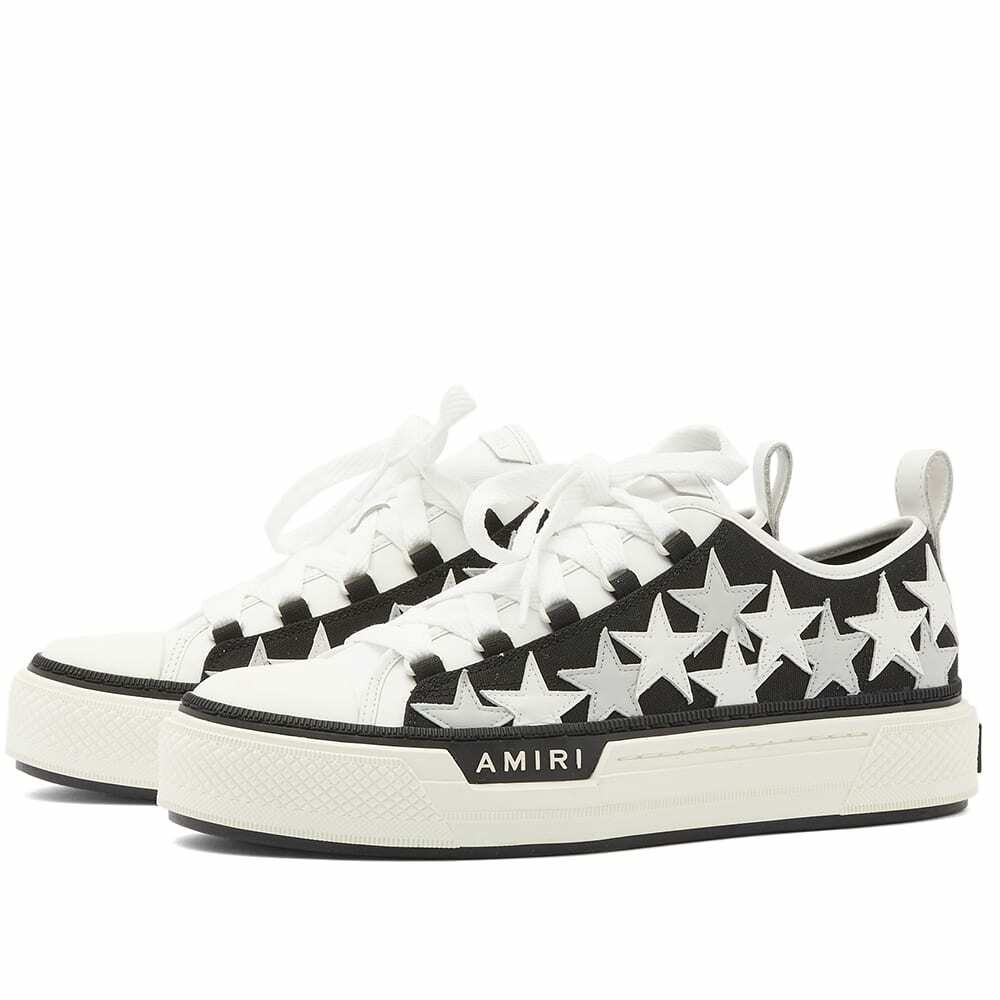
Get Amiri Sneakers Shipped What Is Amiri

AMIRI T-Shirts and Shirting: All a Buyer Needs to Know

Jersey and shirting are the least expensive way into this house, and also the easiest place to spend badly. They are also the two categories where naming errors do the most damage, because two of the core tees are routinely described as if they were the same garment. This breakdown separates them, sets out what the flannel side contains, and puts observed 2026 market prices next to each piece. Figures here are read from live listings rather than an official price list, and they move enough to warrant a re-check before buying. By the end you should be able to look at a listing and state what it is, where it was made and whether the price is justifiable. Start with the two pieces the rest of the category orbits.

Two Core Tees, Two Different Garments

The MA prefix on both is the founder’s initials, not the name of a product family. That prefix leads several sub-lines, among them MA Bar, MA Core, MA Quad, MA Fit and MA Skyline, and it also fronts a sneaker called the MA-1. The two tees below sit in different sub-lines, come from different seasons and are made in different countries. Mixing the two is the single most common mistake in resale listings for this category. A seller who cannot tell you which one they are holding has shown you something useful about the seller. Read the two profiles below as a pair, since the differences are easy to miss on a photograph and obvious on a label.

MA Core Logo Tee

Because it belongs to the Core Collection, this one is a carryover and not a seasonal drop. Official copy gives it as one hundred per cent cotton with the MA icon on the chest and the core logo across amiri men clothing the back. It is made in Italy, which is the detail that decides most authenticity questions about this particular tee. There is a men’s cut and a women’s cut, the latter arriving once womenswear launched in 2021. Being a core piece, it is restocked continuously, and that is precisely why it does not hold value on resale. Its observed retail price was not captured in the listings behind this piece, so any specific figure quoted for it warrants care.

MA Bar Logo Tee

A Pre-Fall 2022 collection, not the permanent core, is where this one comes from. It is a printed cotton tee in a regular fit carrying the AMIRI BAR logo, and it is made in Los Angeles. On a rail, the origin line separates it from the Core tee quicker than anything else. As a season piece, it shows up more often on the secondary market than in current stock. Its observed retail figure was likewise not captured here, and inventing one would be worse than admitting the gap. If an article calls the two different colourways of one product, treat the whole of it as unreliable.

What Else Falls Under the amiri t shirt Heading

Past the two core pieces, the category is mostly graphics, and it is the graphics that carry the price. At authorised multi-brand retail the observed listings begin near about $425 for the plainest logo tees and reach about $930 for the most heavily worked. Long sleeves sit near the top of that range, and oversized cuts are labelled as oversized rather than merely running large. Several names repeat treatments used across the denim, so a Bleach Bandana Patch Tee is the jersey expression of the bandana motif seen on jeans and boots. The bones motif crosses over here as well, on long-sleeve pieces that share their skeleton with amiri shoes. None of these are limited in any formal sense, and most reach markdown within a season.

  • Club Amiri and Club Amiri Wolf Oversized
  • Quality Goods Patch, Sunny Place Skate, Studio Skate, MA Check Patch Skate
  • Dreamers Chain Stitch, Eagle, MA Quad Oversized
  • Bleach Bandana Patch, Bones Long Sleeve, Eagle Flames Long Sleeve

Shirting Here Means Flannel

Flannel is a founding pillar and not a seasonal aside, with the house’s own history citing grungy flannel shirting among its origins. At an observed $1,290, the MA Quad Bleached Flannel is the headline current piece, and it prices a single amiri shirt above most of the line’s jeans. The Bones Flannel Overshirt is priced considerably lower at roughly $865, carrying the skeleton motif instead of the quad. Both are cut and weighted as overshirts, so they are worn as light outer layers rather than tucked under tailoring. Through the Denim Repair Work Jacket and the trucker constructions, denim shirting becomes outerwear, which is an entirely different budget conversation. If poplin dress shirts are what you are after, the record does not support treating formal shirting as a pillar of this house.

Fit: The One Adjustment Most Buyers Make

Because complete garment measurements are not published for every style, fit guidance here is crowd-sourced from buyers. Buyers agree across jersey and shirting that the cut runs slightly trim, so sizing up one is the common advice for a relaxed drape. That advice breaks down for pieces already named oversized, where sizing up compounds an intentional volume. Some product pages state a fit, as the MA Core Logo Hoodie does with normal fit, which is a reason to read the individual page first. Overshirt-weight flannel is normally bought with room for a layer underneath, which works in the same direction. When buying unseen, prioritise a channel with a workable returns window over the last few dollars of price.

What You Will Actually Pay

The table assembles observed figures so a listing can be sanity-checked instead of guessed at. It is shaped by two structural facts, and both of them help the buyer. In-season discounting at authorised multi-brand retail is plain, commonly forty to seventy per cent, and an off-price arm of one stockist group carries past-season stock. That sale floor is also why jersey resale sits well below retail, since nobody pays a premium for something that reaches markdown reliably. Where a figure was not captured in the observations behind this piece, the table says so rather than filling it. Treat every number as a 2026 market observation with a short shelf life.

Piece Category Origin or material noted Price observed
MA Core Logo Tee T-shirt Made in Italy, one hundred per cent cotton Not recorded
MA Bar Logo Tee T-shirt Made in Los Angeles, printed cotton Not captured
Club Amiri Tee T-shirt Unstated $425
Dreamers Chain Stitch Tee T-shirt Unstated $445
Bleach Bandana Patch Tee T-shirt Not given $529, found at $317
MA Quad Oversized Tee T-shirt Not given $629, found at $377
Eagle Tee T-shirt Not stated $929
Bones Flannel Overshirt Shirting Not given Roughly $865
MA Quad Bleached Flannel Shirting Not stated $1,290

Fakes Gather in This Category

Core logo tees and standard logo hoodies are the highest-volume and most copied pieces the house makes. The most useful check is the one most guides skip, which is that country of origin varies by style and must match. Italy for the MA Core Logo Tee, Los Angeles for the MA Bar Logo Tee, the USA for the MX1 and Stack jeans and the MA Core Logo Hoodie, and Vietnam for amiri sneakers. Style codes are structured, with formats such as AMJYHD1050-001 on the core hoodie, and they should be consistent with the style and colour. Wash and size tags on genuine pieces show thin, evenly weighted lettering rather than thick, bulky text, though that is authenticator reporting rather than brand guidance. Guides disagree on stitch counts and zipper brands, so assume the disagreement is genuine and let no single feature decide.

A Buying Sequence That Works

Counterfeit quality is high enough that single-feature checks fail, which is why provenance matters more than micro-detail here. Buy from the brand’s own site or from a retailer named on the stockists list the house publishes, and keep the invoice. The published list is imperfectly maintained: it still names a retailer that closed in 2024 and carries several misspelled entries. The house stated in a federal complaint in July 2021 that there is no official outlet of any kind, which disqualifies any storefront advertising itself as an official discount store. Verification is limited to items bought through the house’s own channels and shown with an invoice, and nothing else is authenticated. If you are among the amiri men assembling a first order of amiri clothing, the sequence below holds the risk and the spend down.

  1. Settle first on a core carryover tee or a season graphic, as their price behaviour differs
  2. Before anything else, confirm the exact model name and the stated country of origin
  3. Go up a size, except where the piece is already named oversized
  4. Look at the current observed band before you accept any asking price
  5. Buy through the official channel or a named stockist, and keep the invoice